Comber E 90

Highest sliver quality, economically produced
  1. High flexibility in terms of raw material utilization
  2. Lowest conversion cost per kilogram of combed sliver
  3. Secured, consistent sliver quality ensured
Rieter comber E 90

Introducing E 90

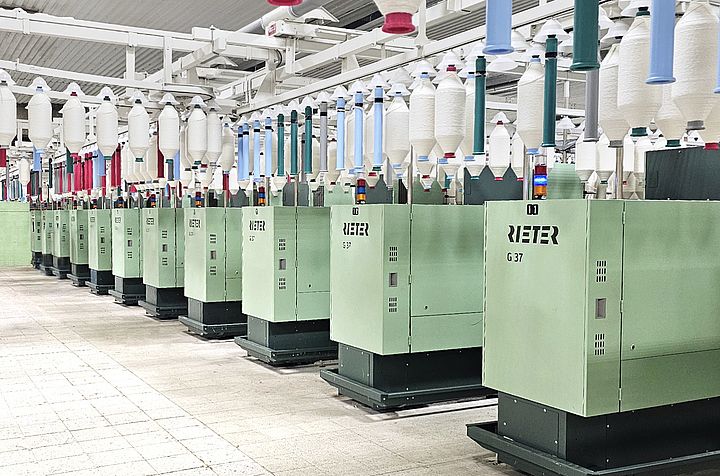
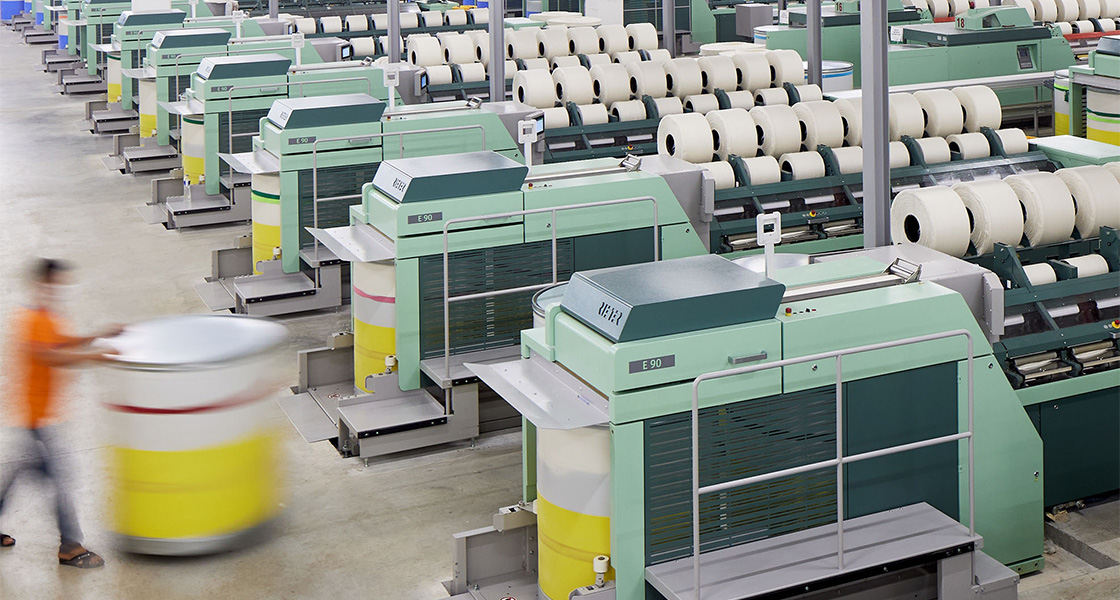
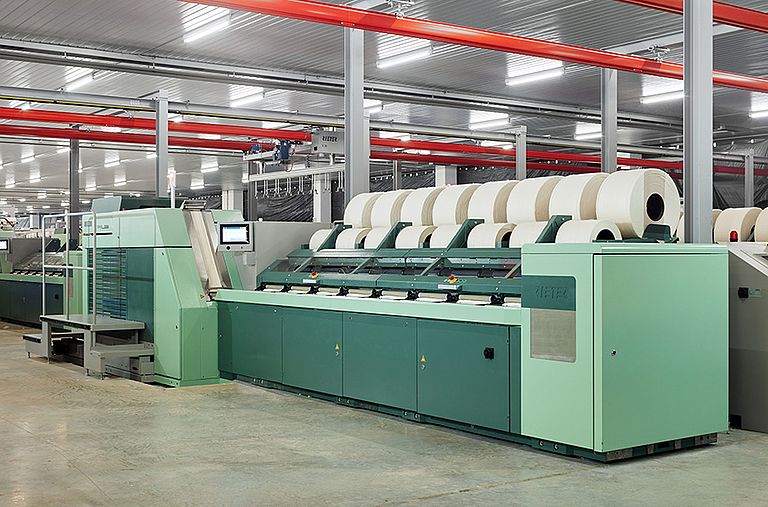
The new comber E 90 produces up to 100 kilograms of combed sliver per hour. Thanks to the proven Rieter Quality Monitor (RQM), a consistent sliver quality is ensured. The new technology components allow for significantly less noil extraction and increase the flexibility of the spinner in terms of raw material utilization.

ESSENTIAL – Rieter Digital Spinning Suite ensures efficient cost and quality management. This means that the E 90 is able to achieve a high yarn quality at low conversion costs.
E 90 key features

Rieter comber E 90

Highest level of productivity on the market

The highest levels of productivity and raw material utilization on the market, as well as economical energy consumption, result in the lowest production costs per kilogram of combed sliver. The comber E 90 produces up to 100 kilograms of combed sliver per hour at a rate of 600 nips per minute, thereby achieving the highest level of productivity available on the market.

The refined can change and lap change systems enable reliable and highly efficient operation of the E 90 – even for cans with a diameter of 1 200 mm.

ESSENTIAL – Rieter Digital Spinning Suite provides all essential quality, productivity and maintenance data at a glance. This allows costs and quality to be managed efficiently.

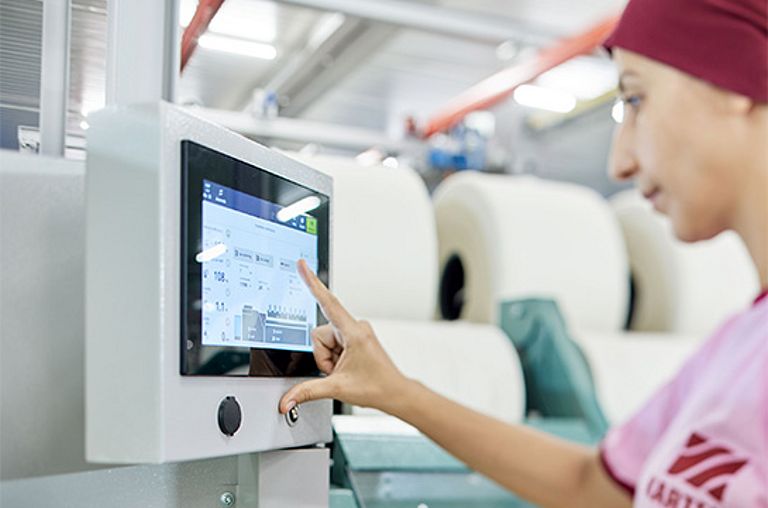
Rieter Quality Monitor (RQM) screen on Comber E 90

Consistently high lap quality

The optional RQM (Rieter Quality Monitor) module is proven to ensure professional data for consistent sliver quality.

The E 90 is equipped with an intelligently controlled lap drive as standard. This lap drive ensures consistent combing conditions and therefore a constant sliver weight. The gentle, controlled fiber treatment is achieved by optimally coordinated combing movements and the technology elements developed by Rieter.

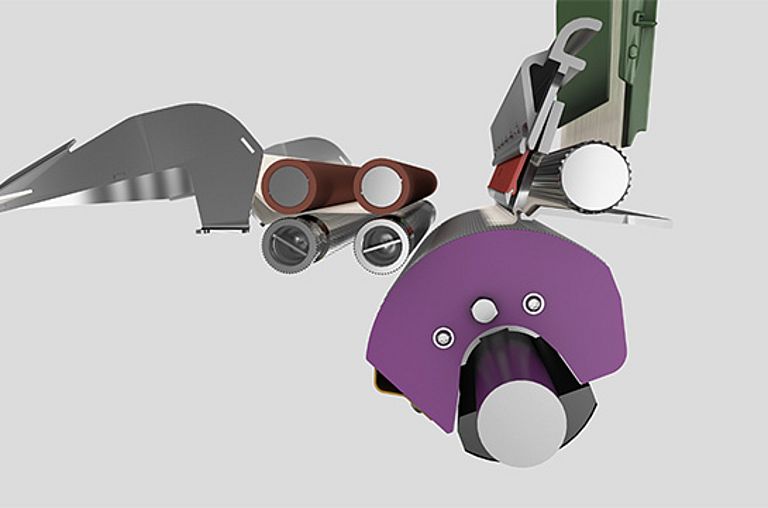
Schematic representation of the combing process

Flexible raw material utilization

The new technology components allow for significantly less noil extraction with only a minimal reduction in quality. This increases the flexibility of the spinner in terms of the raw material utilization.

The new drive and control concept improves user-friendliness, allowing the machine to be rapidly adapted to changing market requirements. 

What customers say about the E 90

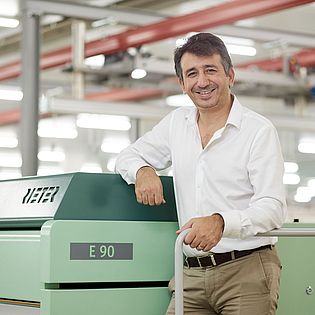
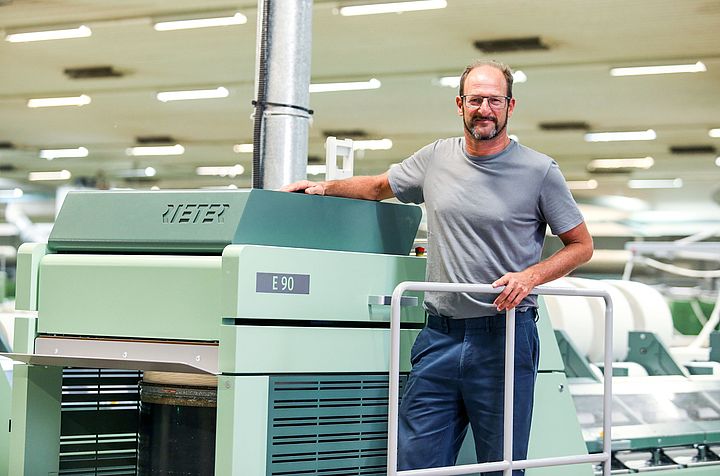
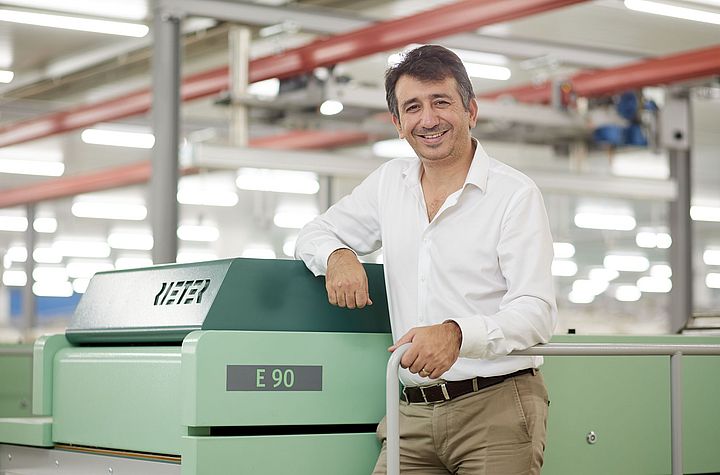
Rieter is committed to heading in the same direction as we are by finding the best solution for our customers. We greatly appreciate Rieter’s way of working with us – accepting the challenge while listening to us and understanding what we need.Hüseyin Kadi, Mill Manager, Karteks Tekstil
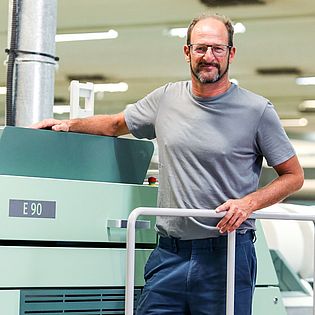
The new comber E 90 takes many things off our hands so that we can concentrate on our priorities. This is mainly due to the Rieter Quality Monitor (RQM). The comber delivers the promised quality very consistently at a high productivity rate.Fabio Borger, owner of Norfil

Technical specification

Technological data

ParameterRange / Unit
E 90 with ROBOlapE 90 without ROBOlap
Raw material,
commercial staple
1 – 1½ (– 1 ⅞) inches
Batt weight(60) 64 – 80 g/m
Laps weight max.21 kg25 kg
Laps diameter max.550 mm650 mm
Laps width300 mm
Noil extraction8 – 25%
Doubling8
Draft10.9 - 26-fold
Sliverweight at delivery3 – 6 ktex
Max. production100 kg/h97 kg/h

Technical data

ParameterRange / Unit
Max. nips per minute600
Frequency50 Hz/60 Hz
Installed power5.5 kW (main motor)
11.12 kW (total)
Power consumption5 kWh @ 550 npm
Compressed air requirements0.4 m3/h @ 7 bar

Machine data

FeatureDescription
Type of feedForward and backward feeding
Feed distance moved per cycle4.3/4.7/4.95/5.2/5.55/5.9
Ri-Q-Comb circular combi505 flex-d40/i705 flex-d40
Ri-Q-Top comb2026, 2030, 2035, 2040
Drafting system4 over 3 with pressure bar
Reserve cans1 or 2 (for 600 mm cans)
Can diameter600 mm, 24 inches/1 000 mm, 40 inches/
1 200 mm (no inch can available)
Can height with castors1 200 mm, 48 inches
Machine distance with SERVOtrolley3 000 mm (with DUC600)
Machine distance with SERVOlap2 800 mm (with DUC600)
Lap transport systemSERVOtrolley E 17 (semi-automated)
SERVOlap E 26 (fully automated)
SuctionCentral suction system
(upwards and downwards)
OptionsAdvanced energy monitoring
Sliver suction device for flock blending
Advanced sliver quality monitoring (RQM)
ESSENTIAL
ROBOlap retrofittable

Frequently asked questions

How does the E 90 ensure consistent sliver quality at high production speeds?

The E 90 achieves maximum up to 100 kg/h combed sliver at 600 nips/min depending on the raw material, at the same time, RQM provides real-time data on sliver quality, detecting deviations early. Combined with the Human Machine Interface, it allows quick adjustments to maintain consistent sliver quality.

How does the ROBOlap on the E 90 improve efficiency compared to manual lap change?

ROBOlap enables fully automated lap changing and batt piecing, reducing operator effort to a monitoring role. Efficiency increases by around 2% compared to semi-automated combers, and piecing quality is measurably better and more consistent than manual piecing.

How does the E 90 compare to the E 86 in terms of faster settings?

On the E 90, the combing speed (stepless), the table tension and the batt tension can be changed on the display easily. The settings of the piecing index and eccentric setting can be adapted without opening the gearbox. The change of the detaching distance is possible with only three screws instead of six in E 86. In addition, the monitoring of the current index position on the display makes the E 90 more user friendly compared to the E 86. On top of that, the E 90 supports an easier setting of drafting distances thanks to the drafting unit DUC which is the same as in the draw frames.

How does the Human Machine Interface (HMI) improve machine operation and flexibility?

The E 90 features a state-of-the-art Human Machine Interface that allows operators to adapt machine settings quickly and intuitively. Parameters can be changed easily and saved as recipes, which can then be replicated across other machines. Quality data can be reviewed, or errors can be resolved much easier as troubleshooting pages are available on the HMI. The HMI also supports USB connectivity and integration with ESSENTIAL, enabling centralized mill management and rapid response to market requirements.

XS
SM
MD
LG
XLG